
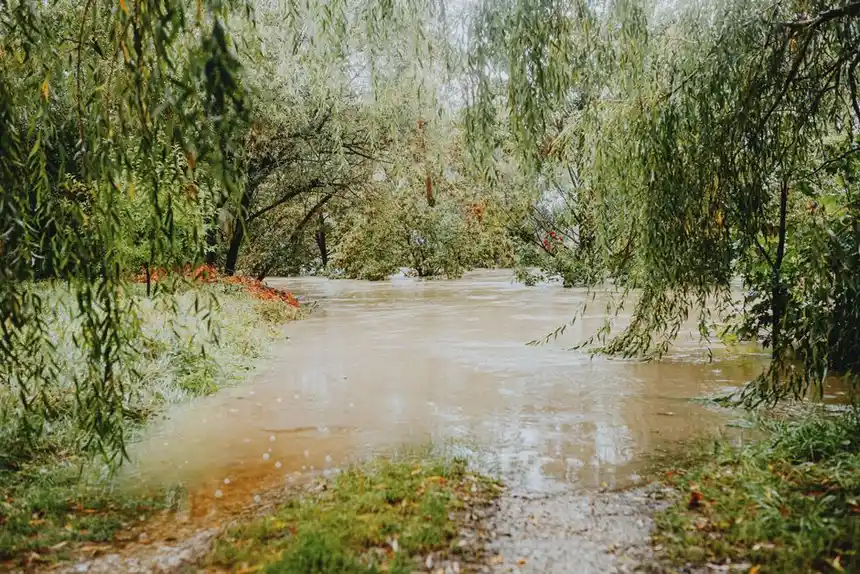
Removing standing water from your basement safely means cutting power to the flooded area before you step in, then pumping the water out in stages so the walls do not collapse from sudden pressure changes. Never wade into a flooded basement while the power is still on, and never pump a full basement down to the floor in one pass. The rest of this guide walks through the exact order of operations we use on basement water removal jobs across Tennessee, from killing the breaker to running the last dehumidifier.
Why standing water in a Tennessee basement is dangerous
Standing water in a Tennessee basement is dangerous because it combines three hazards at once: live electrical circuits, contaminated water, and structural pressure against foundation walls. Tennessee clay soils hold water against the foundation long after the rain stops, so the water you see on the floor is often still being fed from outside.
The electrical risk is the one that kills people. A basement outlet sitting in two inches of water can energize the entire floor. Standard household current at 120 volts is enough to stop a heart. If you cannot reach the breaker panel without stepping in water, stay out and call an electrician or your utility first.
The biological risk is the one people underestimate. Water that entered through a floor drain, a sewer line, or an exterior door is not clean. It carries soil bacteria, lawn chemicals, and in some cases raw sewage. That is why we treat any basement flood that touched a drain or sewer line as a sewage cleanup Tennessee job, not a simple mop-up.
The structural risk is the one that costs the most. A concrete block foundation holding back saturated clay is under enormous load. Drain it too fast and the exterior soil pressure can crack the wall or push it inward. Slow, staged pumping is not caution for its own sake; it is the difference between a wet floor and a $15,000 foundation repair.
How do I safely remove standing water from my basement in Tennessee?
You safely remove standing water from a Tennessee basement by shutting off power to the affected circuits, confirming the water is not touching live equipment, and then pumping the water down in stages while the walls equalize. The full sequence below is the same one our technicians follow.
- Stop the source if you can. If a supply line burst, close the main shutoff. If it is groundwater from heavy rain, you cannot stop it, so move to step two.
- Kill the power. Flip the breakers for the basement circuits at the main panel. If the panel is in the flooded area, do not enter. Call an electrician.
- Photograph everything. Your insurance adjuster will want pictures of the water line on the walls, damaged belongings, and the source. Take them before you move anything.
- Test the water depth and source. Two inches of clean supply-line water is a different job than six inches of sewer backup. The source decides your protective gear.
- Pump in stages. Remove about one-third of the depth, wait an hour, then another third. This lets the exterior soil pressure equalize against the foundation.
- Extract the residual. Once the water is under an inch, a wet/dry vacuum or a professional extractor pulls the rest out of the concrete pores.
- Dry the structure. Air movers and dehumidifiers run for 3 to 5 days to bring framing and concrete back under 16% moisture content.
If you are dealing with a flooded basement after heavy rain in Tennessee, the source is almost always exterior. That means the pumping will not stay done until the groundwater table drops, and you may need to pump for 24 to 48 hours.
Step-by-step: pumping water out of a flooded basement
Pumping water out of a flooded basement in Tennessee starts with a submersible pump rated for at least 1/3 horsepower and a discharge hose long enough to reach a drain or curb at least 20 feet from the foundation. Discharging next to the wall just sends the water back in.
Set the pump on a concrete block or brick so it is not sitting in silt. Silt clogs the intake and burns out the motor. Run the discharge hose to a storm drain, a curb, or a downhill area of the yard. Never discharge into a septic system; it will overload the drain field.
Run the pump for 20 to 30 minutes, then shut it off and let the water level stabilize for an hour. If the level rises more than an inch in that hour, you have an active groundwater feed and you are in for a longer pumping cycle. Repeat until the water is shallow enough to extract.
For basements with finished walls, carpet, or stored furniture, the pumping is only half the job. Water wicks up drywall 12 inches in under an hour, and the padding under carpet holds water like a sponge. That is when water removal Tennessee with commercial extraction equipment saves you from replacing the whole room.
Can I use a shop vac to remove standing water in Tennessee?
Yes, you can use a wet/dry shop vac to remove standing water in Tennessee, but only for the last inch or two after a pump has done the heavy lifting. A typical 12-gallon shop vac holds about 10 gallons of water and takes 30 to 45 seconds to fill. Emptying it every minute is not a real strategy for a 500-square-foot basement.
Shop vacs are the right tool for the shallow residual, the low spots, and the water that pooled under the water heater or furnace. They are the wrong tool for anything over three inches deep. They also do not extract water from carpet padding or drywall, which is where mold starts.
Two safety notes on shop vacs. First, plug them into a GFCI outlet on a circuit that is not in the flooded area. Second, never use a standard household vacuum, even a canister model, on standing water. It will short out and can shock you.
Common mistakes that turn a wet basement into a mold problem
The most common mistake we see on basement flooding cleanup in Tennessee is stopping when the floor looks dry. Concrete and block hold water for days after the surface is dry to the touch, and mold can colonize a damp wall in 24 to 48 hours.
- Pumping too fast. Draining a full basement in one pass can crack the foundation wall. Stage the pumping.
- Skipping the power shutoff. This is the mistake that sends people to the hospital. Breakers first, always.
- Running a household fan. A box fan moves air but does not remove moisture. It can actually spread mold spores around the room.
- Leaving wet carpet and padding. If the padding is soaked, it has to come out. It will not dry in place and it will grow mold.
- Ignoring the source. If you do not fix the grading, the downspout, or the sump pump, the next storm puts you right back here.
- Not documenting for insurance. Photos taken before cleanup are the difference between a covered claim and a denied one.
We see this pattern every spring in the older ranch homes around water damage restoration Madison Tennessee, where original 1960s drain tile is often collapsed or clogged with roots. The water comes in through the floor, not the wall, and homeowners assume the sump pump failed when the real problem is the tile.
When to call a professional for basement water removal in Tennessee
Call a professional for basement water removal in Tennessee when the water is deeper than two inches, when it came from a sewer or drain, when the basement is finished, or when the water has been sitting more than 24 hours. Any one of those conditions pushes the job past what a shop vac and a fan can handle.
Our team handles the whole sequence: pump, extract, dry, and document. We use moisture meters and thermal cameras to find water hiding behind finished walls, and we run commercial dehumidifiers that pull 20 to 30 gallons a day out of the air. A homeowner-grade unit pulls 2 to 4 gallons. That gap is why DIY drying so often fails.
If the water came in through a sewer line or a floor drain, the cleanup is a biohazard job, not a drying job. We remove and dispose of contaminated materials, disinfect the surfaces, and verify the space is safe before we put anything back.
We also handle the structural side. If the flood was part of a larger storm event, the same crew can manage storm damage restoration services Tennessee so you are not coordinating three different contractors.
How to prevent basement standing water in Tennessee
Preventing basement standing water in Tennessee comes down to moving roof and surface water away from the foundation before it can find a path in. Tennessee gets roughly 50 inches of rain a year, and most of it arrives in intense spring and fall storms that overwhelm undersized drainage.
Start with the downspouts. Every downspout should discharge at least 6 feet from the foundation, ideally onto a splash block or into a buried extension. If your downspouts dump right at the wall, you are feeding the problem every time it rains.
Next, check the grading. The soil around the foundation should slope away at about 6 inches of drop over the first 10 feet. After 20 or 30 years, most yards have settled toward the house. Adding a few yards of clay-heavy topsoil and re-grading is one of the cheapest fixes you can make.
Then look at the sump pump. Test it twice a year by pouring a bucket of water into the pit. If it does not kick on within a few seconds, the float or the switch is stuck. Replace the pump every 7 to 10 years whether it is working or not, and add a battery backup if you are on a well or in an area with frequent outages.
Finally, keep the gutters clean. A clogged gutter sends water over the edge and straight down the wall. Twice-a-year cleaning, once in late spring and once after the leaves drop, prevents most of the wall staining and floor seepage we get called out for.
Frequently Asked Questions
How do I safely remove standing water from my basement in Tennessee?
Shut off power to the basement circuits first, then pump the water down in three stages over several hours so the foundation walls equalize. Extract the residual with a wet/dry vac, then run dehumidifiers for 3 to 5 days. Never enter a flooded basement while the power is on.
Can I use a shop vac to remove standing water in Tennessee?
Yes, for the last inch or two. A 12-gallon shop vac fills in under a minute, so it is impractical for anything deeper than about 3 inches. Use a submersible pump for the bulk of the water and the shop vac for the residual and low spots.
What are the dangers of standing water in basement Tennessee?
The three main dangers are electrocution from energized outlets and appliances, bacterial and sewage contamination from drain or sewer backup, and structural damage from soil pressure against the foundation. Mold can start growing on wet framing within 24 to 48 hours.
How to prevent basement standing water in Tennessee?
Extend downspouts at least 6 feet from the foundation, re-grade the soil to slope away at 6 inches over 10 feet, test your sump pump twice a year, and clean gutters every spring and fall. These four steps prevent most of the seepage we see.
Who to call for basement water removal in Tennessee?
Call a licensed water damage restoration company that handles pumping, extraction, structural drying, and mold prevention in one job. Water Damage Pros Tennessee serves homeowners statewide and can be reached at (855) 713-4896 for emergency basement water removal.
Get help with Water Damage in Tennessee
If the water is deeper than a couple of inches, came from a drain or sewer, or has been sitting for more than a day, the fastest safe move is to hand it to a crew that does this every week. Water Damage Pros Tennessee pumps, extracts, dries, and documents the whole job so your basement is dry and your insurance claim is clean.
Call (855) 713-4896 and we will walk you through the next step, whether that is shutting off a breaker or sending a crew today.