
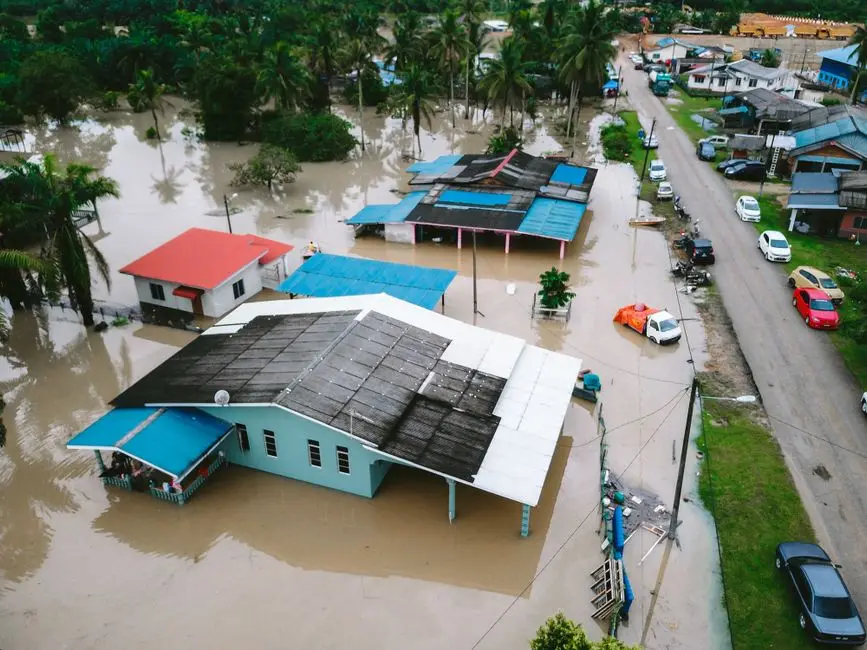
No, standard homeowners insurance in Tennessee does not cover flood damage. Flood damage is excluded from virtually every HO-3 and HO-5 policy sold in the state, and you need a separate flood policy - through FEMA's National Flood Insurance Program or a private carrier - to be reimbursed for rising water. That single exclusion is the most expensive misunderstanding in homeownership, and we see the fallout every time a creek jumps its bank in Middle Tennessee.
What follows is how the exclusion actually works, where the line sits between flood damage and the water damage your policy does cover, what flood insurance costs here in 2026, and how to file a claim that gets paid instead of denied.
The Short Answer: Flood Damage Is Excluded From Standard Tennessee Homeowners Policies
Does homeowners insurance cover flood damage in Tennessee? No - and the exclusion is written into the policy language, not left to the adjuster's discretion. Every standard Tennessee homeowners policy defines flood as surface water, storm surge, overflow of a creek or river, mudflow, and water that seeps up from the ground. If the water touched the ground before it touched your house, your homeowners policy is not paying for it.
That definition matters because Tennessee has more flood exposure than most residents assume. FEMA flood maps show roughly 300,000 Tennesseans living in Special Flood Hazard Areas, and about 20% of all flood claims nationwide come from properties outside those high-risk zones. In other words, four out of five flood claims come from homes nobody flagged as flood-prone.
The Tennessee Emergency Management Agency logged major flood events in 2010, 2019, 2021, and again in 2023. Nashville's May 2010 flood alone caused over $2 billion in damage. If you own a home anywhere near the Cumberland River, the Harpeth, the Duck, or the network of smaller creeks that thread through Davidson and Williamson counties, you have flood risk whether your lender told you so or not.
Flood Damage vs. Water Damage in Tennessee: What Your Policy Actually Covers
The difference between flood damage and water damage insurance in Tennessee comes down to one question: where did the water originate? Water that escapes from inside your plumbing system is typically covered. Water that arrives from outside your home is not.
Here is how the two categories break down in real claims we handle across the state.
Water damage your Tennessee homeowners policy usually covers
- Burst or frozen pipe - a supply line fails inside a wall or under a sink and soaks drywall, flooring, and cabinets.
- Water heater failure - a tank ruptures and dumps 40 to 50 gallons into a utility closet or garage.
- Appliance supply line - the braided line behind a washing machine or refrigerator lets go.
- Roof leak from a covered peril - a windstorm tears off shingles and rain enters through the breach.
- Accidental overflow - a tub or toilet overflows while the home is occupied.
Water damage your Tennessee homeowners policy excludes
- River, creek, or stream overflow - the classic flood definition.
- Surface water pooling - rain that sheets across your yard and enters at the foundation.
- Storm surge - less common inland but relevant near Tennessee's larger reservoirs.
- Groundwater seepage - water wicking up through a slab or basement floor.
- Sewer backup - unless you bought a specific sewer backup endorsement, which is a cheap add-on most homeowners skip.
One more wrinkle: even a covered peril has limits. Many Tennessee policies cap mold remediation at $10,000 and will not pay for mold that resulted from a long-running leak the homeowner should have noticed. If you are dealing with a wet crawl space or a basement that takes on water every spring, our Crawl Space Water Removal in Tennessee team can dry it out before the damage becomes a claim denial.
Do I Need Flood Insurance in Tennessee?
You need flood insurance in Tennessee if your home sits in a FEMA Special Flood Hazard Area, if you have a federally backed mortgage on a property in one of those zones, or if you simply want to be paid when rising water damages your home. Federally backed mortgages - FHA, VA, USDA, Fannie Mae, Freddie Mac - require flood coverage on any structure inside a high-risk zone.
Outside those zones, flood insurance is optional. We still recommend it for most homeowners in the Nashville metro, Memphis, Knoxville, Chattanooga, and Clarksville areas. Here is why:
- Tennessee's clay-heavy soils shed water instead of absorbing it, so a 2-inch rain can pond against a foundation.
- New development in Williamson, Rutherford, and Wilson counties has changed drainage patterns in older neighborhoods.
- Roughly 25% of NFIP claims come from properties in moderate- to low-risk zones, where premiums run $400 to $700 a year.
If your home has flooded once, it will likely flood again. NFIP rules allow up to $250,000 in building coverage and $100,000 in contents coverage for a single-family home. Private flood carriers often write higher limits and can include basement contents that NFIP excludes.
We work alongside homeowners in every corner of the state, from Water Damage in Nashville where the Cumberland backs up into low-lying neighborhoods, to the suburbs where sump pumps run nonstop from March through May. Knowing your zone is step one. Knowing who to call when the water wins is step two.
What Tennessee Flood Insurance Costs in 2026
Tennessee flood insurance cost in 2026 depends on your flood zone, elevation, coverage limits, and deductible. FEMA's Risk Rating 2.0 pricing model now sets rates by the specific risk of your address rather than by zone alone, which means two homes on the same street can pay very different premiums.
Typical 2026 pricing in Tennessee looks like this:
- Moderate- to low-risk zone (Zone X): $450 to $800 per year for $250,000 building coverage.
- High-risk zone (Zone AE): $1,200 to $3,500 per year, with elevated homes on the lower end.
- Contents-only policy: $200 to $600 per year for renters and condo owners.
- Private flood policy: $700 to $2,500 per year, often with higher limits and shorter waiting periods.
There is a 30-day waiting period on most new NFIP policies. If a storm is already in the forecast, you cannot buy coverage the day before it hits. Private carriers sometimes shorten that window to 10 or 14 days, but the rule of thumb is simple: buy flood insurance in the dry season, not the week you need it.
One more number worth knowing. The average flood claim in Tennessee runs $35,000 to $60,000 when a home takes on 6 inches of water. A $600 annual premium against a $40,000 loss is the cheapest math in homeownership.
How to File a Flood Damage Claim in Tennessee
Filing a flood damage claim in Tennessee follows a specific sequence, and the order matters. Skip a step and you give the adjuster a reason to reduce or deny the payout.
- Document everything before you move it. Photograph water lines on walls, damaged furniture, ruined appliances, and the exterior high-water mark. Take video walking through each affected room.
- Call your flood carrier, not your homeowners carrier. If you only have an NFIP policy, call the NFIP Direct line or the insurance agent who wrote the policy. Your homeowners carrier will not open a flood claim.
- Get the water out fast. Flood policies pay to mitigate further damage. Standing water left for 48 hours turns into a mold claim the adjuster may deny. Call a Flood Damage Cleanup in Tennessee crew the same day if you can.
- Keep every receipt. Hotel stays, meals, generator fuel, and the invoice from your restoration company are all reimbursable under most policies.
- Meet the adjuster on site. Walk the property with them. Point out damage they might miss - warped baseboards, swollen cabinet boxes, a furnace that took on water.
- Do not sign a final proof of loss until the drying is complete. Hidden moisture shows up weeks later. Once you sign, the claim closes.
NFIP typically issues payment within 30 to 60 days of a completed proof of loss. Private carriers move faster, often 10 to 21 days. If you disagree with the settlement, you have 60 days to request a reinspection.
Common Mistakes That Get Tennessee Flood Claims Denied
Most denied flood claims in Tennessee fail for preventable reasons. Here are the ones we see most often.
- Waiting to call. Mold starts growing in 24 to 48 hours. Adjusters treat delayed mitigation as homeowner negligence.
- Throwing out damaged items. The adjuster needs to see the soaked couch, the ruined carpet, the warped hardwood. Photograph before you haul to the curb.
- Confusing flood with water damage on the claim form. If you describe a burst pipe when the actual cause was creek overflow, the claim gets flagged for fraud review.
- Assuming your homeowners policy will cover the basement. It will not, if the water came from outside. Basement flooding is one of the most common exclusions in Tennessee.
- Skipping the sewer backup endorsement. A $50-a-year rider covers a $15,000 cleanup. Most homeowners decline it and regret it.
- Not documenting pre-existing damage. If your basement already had a hairline crack, prove it was there before the flood. Otherwise the adjuster may attribute the whole loss to the flood and reduce your payout.
If your basement takes on water every time it rains hard, that is a drainage problem, not a flood problem, and it will not be covered either way. Our Basement Water Removal in Tennessee team handles those calls year-round, and we can tell you within an hour whether the source is groundwater, a failed sump, or a foundation crack.
When to Call a Professional
Call a professional the moment water is deeper than a towel can handle. That means any standing water in a finished space, any water that has touched drywall, and any water that has been sitting for more than a few hours. We handle the extraction, the structural drying, the mold prevention, and the documentation your adjuster needs.
Water Damage Pros Tennessee works flood and water damage claims across the state every week. We photograph the loss, extract the water, set drying equipment, and hand you a moisture log you can submit with your claim. If the adjuster needs a scope of work, we write it. If the carrier pushes back, we answer the questions.
One call gets a crew moving. We bill insurance directly when the carrier allows it, and we tell you the out-of-pocket number before we start.
Frequently Asked Questions
Does homeowners insurance cover flood damage in Tennessee?
No. Standard Tennessee homeowners policies exclude flood damage entirely. You need a separate NFIP or private flood policy to be reimbursed for rising water, surface water, or storm surge. Roughly 20% of flood claims come from homes outside designated high-risk zones.
What is the difference between flood damage and water damage in Tennessee?
Flood damage comes from water that touched the ground first - a creek, river, or surface runoff. Water damage comes from inside the home - a burst pipe, failed water heater, or overflowing appliance. Homeowners policies cover the second category and exclude the first.
Do I need separate flood insurance in Tennessee?
Yes, if your home sits in a FEMA Special Flood Hazard Area or carries a federally backed mortgage in one. Even outside those zones, we recommend it. Premiums in moderate-risk areas run $450 to $800 per year for $250,000 in building coverage.
How do I file a flood damage claim in Tennessee?
Photograph everything, call your flood carrier (not your homeowners carrier), start water extraction within 24 hours, keep every receipt, and meet the adjuster on site. NFIP pays within 30 to 60 days of a completed proof of loss.
Does Tennessee homeowners insurance cover basement flooding?
Only if the water came from a covered source inside the home, like a burst pipe. Groundwater seepage, surface runoff, and creek overflow in a basement are excluded. A sewer backup endorsement covers a related but separate problem.
Get Help With Water Damage in Tennessee
Whether the water came from a failed pipe or a flooded creek, the clock starts the moment it stops rising. We extract, dry, and document so your claim has the best shot at a full payout.
Call Water Damage Pros Tennessee at (855) 713-4896. We answer 24/7 and dispatch crews across the state.